
I was injured on a cruise from Port Everglades or on a boat in Fort Lauderdale. How long do I have to act?
Possibly as little as six months. If you were hurt on a cruise that sailed from Port Everglades in Fort Lauderdale, the passenger ticket contract almost always says you must send the cruise line written notice of your claim within six months and file suit within one year, and federal law lets the line hold you to that (46 U.S.C. § 30508). An injury on a private boat, a rental, or a charter on the Intracoastal, the New River, or offshore is usually governed by federal maritime law with a three-year deadline (46 U.S.C. § 30106), and Florida's boating statutes in Chapter 327 set the rules every operator must follow.
Florida's ordinary two-year injury deadline and its car-insurance rules such as PIP do not control these cases, which is why people who wait often find the time is already short. Wolfson & Leon, founded in 1963 by Jerome Wolfson, represents cruise passengers and boating accident victims from its office in downtown Fort Lauderdale. The consultation is free, in English or Spanish, and you pay no fee unless the firm recovers money for you.
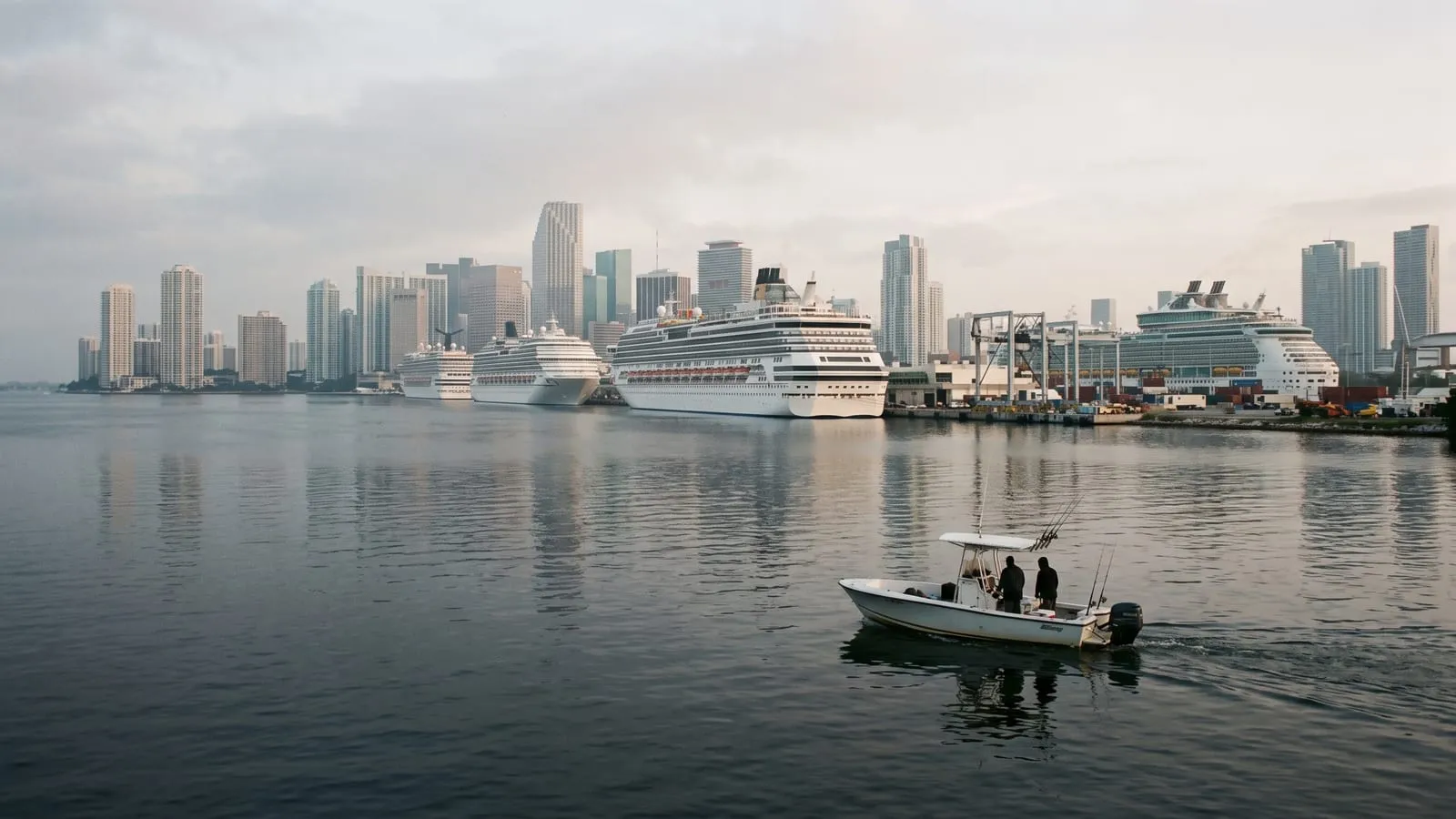
Why does my cruise ticket matter more than Florida law?
Because a cruise is a voyage on navigable water, federal maritime law governs the claim, and that law allows a cruise line to write its own notice and filing limits into the ticket, as long as they are no shorter than six months for written notice and one year for a lawsuit (46 U.S.C. § 30508). Cruise lines use those minimums. The ticket also usually names the court where any lawsuit has to be filed, often federal court in South Florida, and a case filed somewhere else can be thrown out or moved.
The ticket is a long legal document, and most passengers never open it. You can usually find it attached to your booking confirmation or posted on the cruise line's website. Save a copy now. The written notice it requires is a specific letter sent to a specific place, and it is not satisfied by telling a cabin steward, filling out a guest comment card, or being seen in the ship's medical center. If the six months pass without proper notice, expect the cruise line to argue the claim is barred, however badly you were hurt.
Does it matter where on the trip I got hurt?
It can. Injuries on the ship itself are the most common: falls on wet pool decks and around the buffet, missteps on dim stairways and raised door thresholds, injuries in the gym or on water slides, food poisoning and norovirus outbreaks, and assaults by other passengers or crew where security was lacking. Medical care in the ship's infirmary can also be negligent, and a missed diagnosis at sea is still a claim.
Off the ship, a shore excursion the cruise line sold or promoted can lead to a claim against the line, depending on how the tour was marketed and what the line knew about the operator. A fall in the cruise terminal or on the gangway at Port Everglades, before you board or as you leave, may involve a different responsible party and different rules than an injury onboard, so the exact location matters and should be written down.
Wherever it happened, the legal test is close to the one used on land. The cruise line owes passengers reasonable care under the circumstances, and you generally have to show the line knew, or should have known, about the danger that hurt you. Prior complaints, earlier incidents in the same spot, and the ship's own cleaning and inspection logs are the kind of proof that answers that question, and much of it is in the cruise line's hands.
I don't live in Florida. I just flew into FLL and sailed from Port Everglades. Can I still bring a claim?
Yes. A large share of the people who sail from Port Everglades are visitors who flew into Fort Lauderdale-Hollywood International Airport next door and went home after the cruise. Living out of state does not take away a claim that arose on a Florida cruise, and because the ticket usually sends the case to a court in South Florida, a Florida firm is the natural place to start.
Wolfson & Leon can handle much of the work by phone and email, request your onboard medical records and incident report, and coordinate with the doctors who treat you at home. What you should not do is wait until you are fully recovered to call. The six-month notice period keeps running while you heal.
Who is responsible for a boat, jet-ski, or charter accident on Broward's waterways?
Anyone who has waited at a drawbridge on a Saturday knows how much traffic Fort Lauderdale's water carries: the Intracoastal Waterway, the New River through downtown, hundreds of miles of residential canals, the Port Everglades inlet and Hillsboro Inlet to the north, and the sandbars where boats raft up on weekends. Add jet-ski and boat rental counters along the beach and the marinas, yacht charters, dive boats, the Water Taxi, and the crowds on the water around the Fort Lauderdale International Boat Show each fall.
When someone is hurt on those waters, the claim usually runs against the person operating the vessel and often its owner, who may be different people, and against the operator of any other boat that caused the crash. A rental company, a charter operator, or the Water Taxi is a business carrying people for money and owes them reasonable care. The question is what each one did or failed to do: running too fast in a crowded channel, not keeping a lookout near swimmers at a sandbar, renting a jet ski to someone who should not have had it, or sending a vessel out in poor condition.
Federal maritime law generally governs these cases, and the deadline to sue is three years (46 U.S.C. § 30106). Florida's boating statutes supply the rules of operation:
- Reckless or careless operation is prohibited. A boater has to account for traffic, wake, weather, and people in the water (Fla. Stat. § 327.33).
- Accidents must be reported when someone is injured or killed or the damage is over $2,000 (Fla. Stat. § 327.30).
- Boater education. Anyone born on or after January 1, 1988 must carry a boating safety education ID card to operate most motorboats (Fla. Stat. § 327.395).
- Jet skis and other personal watercraft. The operator must be at least 14 years old, and everyone aboard must wear a life jacket (Fla. Stat. § 327.39).
What should I do in the first days after a cruise or boating injury?
The first days decide what proof exists later. Cruise passengers disembark within hours of docking, and boats at a sandbar scatter by sunset. Work through this list while it is still possible:
- Onboard a ship, ask security to write an incident report and request a copy. The ship's medical chart is a different record, kept by the cruise line's own staff.
- Take photos and video right away of the wet floor, the broken step, the poor lighting, or the boat's damage, plus your injuries, before anything is mopped, fixed, or towed.
- Collect names, cabin numbers, and phone numbers from witnesses before you leave the ship at Port Everglades. After disembarkation they are nearly impossible to find.
- On the water, write down the boat names, registration numbers, and the operators and owners involved, and keep any rental agreement or charter paperwork.
- Make sure a boating accident is reported if someone was hurt or the damage passes $2,000.
- Keep your ticket, booking confirmation, boarding pass, and any excursion receipts.
- Get checked by your own doctor, in Broward or back home, as soon as you are off the ship. The ship's doctor is employed by the cruise line.
- Talk to a lawyer while the six-month notice window still has plenty of room in it.
What can a cruise or boating claim pay for, and who pays it?
Under federal maritime law, a person hurt through a cruise line's or a boat operator's negligence can recover the medical bills, the income lost while recovering, and compensation for pain and suffering. None of the Florida auto-insurance machinery applies: there is no PIP to exhaust first and no permanent-injury threshold to clear.
With a cruise line, the money is rarely the hard part, since the lines carry substantial insurance. The hard parts are proving the line knew or should have known about the hazard, and meeting the ticket's six-month notice and one-year filing limits. With a recreational boat, the hard part is often the opposite: Florida does not require boat insurance, so the case depends on finding every policy that covers the operator, the owner, a rental company, or another vessel. Tracking down that coverage can matter as much as proving who was at fault.
What can quietly ruin a cruise or boating claim?
- Counting on the onboard incident report as your notice. The ticket's six-month written notice is a separate, formal step.
- Thinking you have two years. That is the general Florida rule, and a cruise ticket typically cuts the time to sue to one year, in the court the ticket names.
- Letting the ship's medical center be your only care. See a doctor of your own choosing once you are ashore.
- Signing a release for onboard credit or a discount on a future sailing.
- Leaving the ship at Port Everglades without witness contact information.
- After a boat crash, skipping the report Fla. Stat. § 327.30 calls for and not identifying every boat, operator, and owner involved.
- Assuming a rental form or a friendship means there is no claim before anyone has looked at the paperwork or the insurance.
Key facts
- Federal law lets a cruise line set a written-notice deadline of no less than 6 months after the injury and a filing deadline of no less than 1 year. Source: 46 U.S.C. § 30508
- The passenger ticket usually names the court for any injury lawsuit, often federal court in South Florida. Source: Cruise passenger ticket contracts
- Personal injury claims under general maritime law, including most boating cases, carry a 3-year filing deadline. Source: 46 U.S.C. § 30106
- A boating accident must be reported when it causes injury or death or more than $2,000 in damage. Source: Fla. Stat. § 327.30
- Operating a vessel in a reckless or careless manner is against Florida law. Source: Fla. Stat. § 327.33
- People born on or after January 1, 1988 need a boating safety education ID card to operate a motorboat. Source: Fla. Stat. § 327.395
- A jet-ski operator must be at least 14, and everyone aboard must wear a life jacket. Source: Fla. Stat. § 327.39
Frequently asked questions
I slipped in the cruise terminal before I even boarded. Is that a claim against the cruise line?
Maybe, maybe not. The terminal, the gangway, and the ship can be controlled by different parties, and the rules and deadlines can change with who controlled the spot where you fell. Note exactly where it happened, photograph it, report it to whoever is in charge there, and get advice quickly so the shortest possible deadline is not missed.
My excursion was in another country. Can a case still be brought here?
Often, yes. When the cruise line sold or promoted the excursion and the ticket requires suit in South Florida, the case may be brought here even though the injury happened abroad. Whether the line is responsible for the tour operator depends on the facts. The ticket's notice and filing limits still apply.
The cruise line is offering me a credit toward another cruise. What happens if I take it?
If accepting it means signing a release, the claim is over, usually for far less than the injury is worth. Find out what your injury will cost you first. A consultation is free, and given the short deadlines, it is worth having before you sign anything.
A friend was driving the boat at the sandbar when I got hurt. Do I have to sue my friend?
A claim like this is usually paid by the boat owner's or operator's insurance, if there is any, not out of your friend's pocket. Friendship does not reduce the operator's duty to run the boat carefully. Florida does not require boat insurance, so finding every policy that might apply, including policies on any other vessel involved, is part of the work.
I signed a form at the jet-ski rental counter. Does that end any claim?
Not necessarily. Whether a rental form holds up depends on what it says and what actually happened, so do not assume it closes the door. Have a lawyer read it. Also note the operator's age and whether life jackets were worn, since Florida requires both for jet skis.
I work on a yacht, a charter boat, or a cruise ship and was hurt on the job. Is that the same kind of case?
No. Crew members are not treated like passengers. A seaman can have claims under the Jones Act (46 U.S.C. § 30104) and general maritime law, including maintenance and cure and unseaworthiness, with their own rules. Fort Lauderdale has a large yacht and charter workforce, and Wolfson & Leon can tell you on the first call which rules fit your job.
What happens when you call
Someone at the firm picks up
Call (754) 305-0820 day or night and you reach a member of the team, who can speak with you in Spanish if that is easier. After hours, we take your name and number and an attorney calls you back that morning.
A short conversation about the accident
We will ask for the date and place, whether a doctor has seen you, whether police wrote a report, and whether an insurance company has contacted you. It usually takes a quarter of an hour, and you do not need to find any documents first.
A straight answer, even if it is not the one you hoped for
If your case is one we can take, we walk you through what comes next and what to avoid for now, such as giving a recorded statement. If it is not, we say so plainly and point you to someone who may help.
Nothing to pay up front
If you decide to work with us, the fee is a percentage of whatever is recovered, set out in writing before you sign. No recovery means no fee. If you cannot get to downtown Fort Lauderdale, we come to your home or the hospital.
Related articles
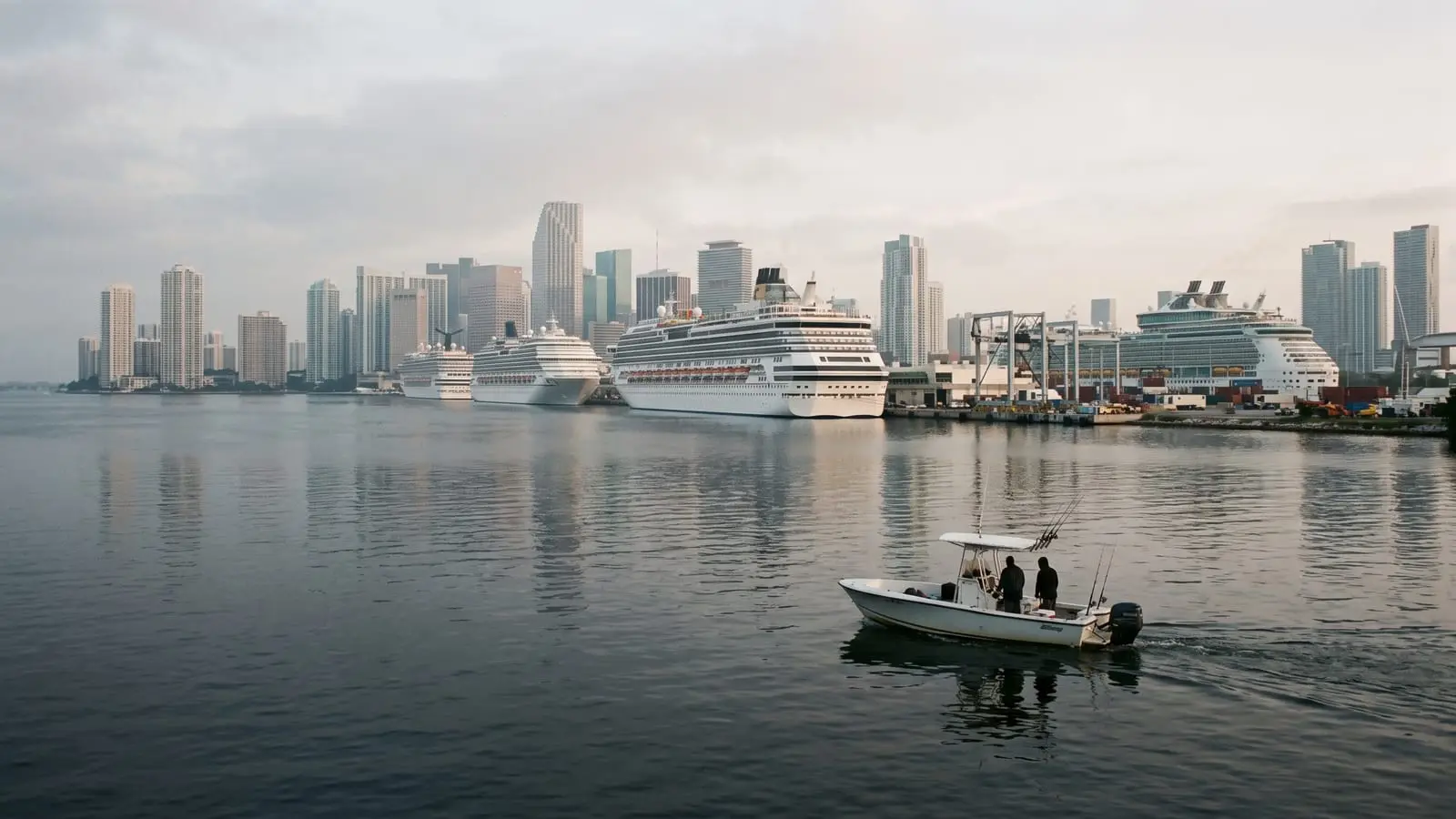 Cruise ship and boating accidents
Boating or jet-ski accident on the Intracoastal or at a sandbar near Fort Lauderdale: what the law requires, and who pays
After a boating or jet-ski accident on the Intracoastal, a canal, or at a sandbar near Fort Lauderdale, Florida requires the operators involved to…
Cruise ship and boating accidents Hurt at Port Everglades or on a cruise that left Fort Lauderdale? Check your ticket for two deadlines
If you were hurt on a cruise that sailed from Port Everglades in Fort Lauderdale, your ticket contract most likely gives you six months to send the…