
A driver with no insurance hit me in Fort Lauderdale, or drove off. Who pays for my injuries?
In most cases your own car insurance pays, through its uninsured motorist (UM) coverage, once your PIP benefits are used up. That holds whether the other driver had no bodily injury coverage, had too little, or left the scene before anyone got a plate, and it applies on any road in Fort Lauderdale or the rest of Broward.
This comes up often because Florida only makes drivers carry PIP and $10,000 of property damage liability, not coverage for the people they injure (Fla. Stat. § 324.022, § 627.733). At the same time, every insurer has to offer you UM and needs your written rejection if you turned it down (Fla. Stat. § 627.727). So people who assume they have no UM frequently do, either on their own policy or on one held by a relative in the same household.
Wolfson & Leon, founded in 1963, handles these claims from its downtown Fort Lauderdale office near Las Olas. The consultation is free, in English or Spanish, and you pay no fee unless the firm recovers money for you.
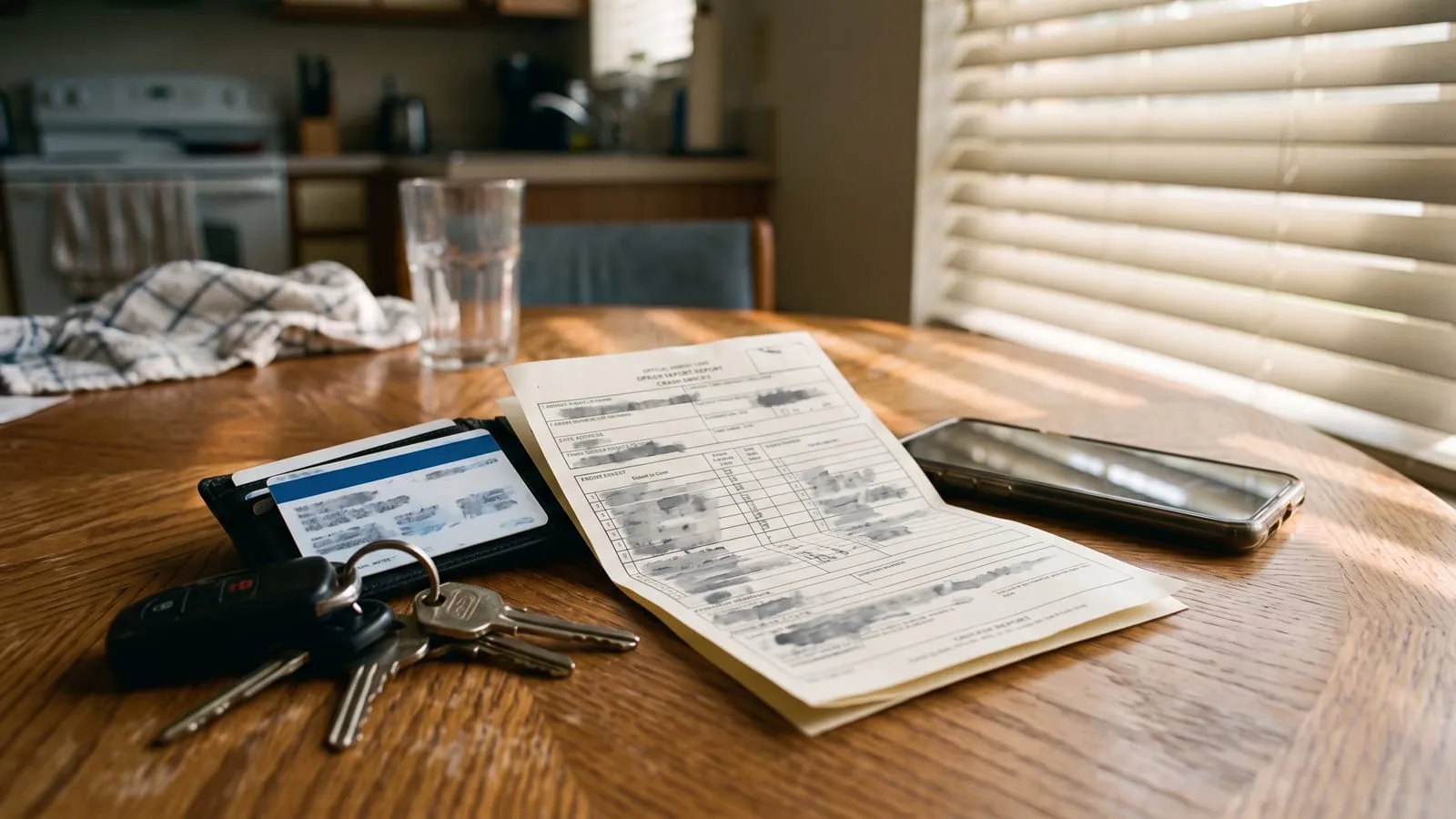
When the at-fault driver has nothing, who pays, and in what order?
Think of it as layers. Each one picks up where the one before it stops:
- PIP comes first. Your personal injury protection pays the first $10,000 of medical bills and lost wages, regardless of fault.
- Your UM coverage comes next. It stands in for the bodily injury policy the other driver should have had, and pays for the losses beyond PIP, up to your UM limits.
- Underinsured coverage (UIM) fills the gap when the other driver had some bodily injury coverage, but less than your losses.
- Health insurance can cover treatment once PIP runs out, while the UM claim is pending.
How can I tell whether I have UM, and whether it stacks?
Find the declarations page, the summary sheet at the front of your auto policy. Look for a line reading “Uninsured Motorist” or “UM/UIM,” the dollar limits, and the word stacked or non-stacked. Then ask the same question about every relative who lives with you and owns a car; their UM can protect you too.
The stacking line matters a lot. Stacked coverage multiplies your UM limit by the number of vehicles on the policy and goes with you into any vehicle. So a two-car policy with $50,000 of stacked UM gives you $100,000 for a single crash. Non-stacked coverage counts once and comes with more exclusions. Under Florida law, coverage is stacked unless you signed a specific form rejecting stacking (Fla. Stat. § 627.727(9)).
That is why we ask the insurer for the full policy and every rejection form, not just the summary. Insurers sometimes get the paperwork wrong, and when the signed rejection is missing or defective, the higher stacked limits apply.
The driver hit me and fled on I-95, US 1, or A1A. Am I still covered?
Yes. Under Florida law, a driver who cannot be identified because they left the scene is treated as an uninsured motorist, so your UM coverage applies to a hit-and-run. Your insurer will want proof that another vehicle was involved, so the police report carries real weight.
Report it right away to the agency for the road you were on: the Florida Highway Patrol on I-95, I-595, the Turnpike, and the Sawgrass Expressway; Fort Lauderdale Police on city streets like US 1 / Federal Highway, A1A along the beach, or Las Olas; and the Broward Sheriff's Office in unincorporated areas and the cities it serves. Get the case number. The report itself can later be requested through the Florida Crash Portal. Many UM policies require the report promptly, often within 24 hours.
UM is not only for drivers. It also covers you if you were on foot, on a bicycle, or riding as a passenger in someone else's car, as long as you or a relative you live with has a policy that includes UM.
I'm a visitor, I was in a rental car, or my car is insured in another state. Does this still work?
Broward sees a steady flow of tourists, cruise passengers, and rental cars leaving FLL, plus seasonal residents who live here part of the year. Each of those situations changes where we look:
- If a rental car driver hit you, the rental company, as the owner of the vehicle, may share responsibility under Florida's dangerous instrumentality doctrine, within the limits in Fla. Stat. § 324.021(9)(b).
- If you were driving a rental when an uninsured driver hit you, we look at your own policy back home and at any coverage you bought at the rental counter.
- If you spend winters in Broward with a car insured in another state, the Florida rules on this page may not be the ones that govern that policy. What the policy says, and where it was issued, decide a great deal, so we read the policy itself before telling you what it covers.
Why does my own insurance company act like the other side?
Because in a UM claim, it is. You are asking your own insurer to pay what the at-fault driver's insurer would have paid, and the law lets your insurer raise every defense that driver could have raised. That includes arguing your injury is not permanent, which matters for pain and suffering under Fla. Stat. § 627.737, and arguing that you share the fault.
Expect requests for a recorded statement, medical records going back years, and sometimes an examination under oath. You have duties to cooperate under the policy, but you do not have to do it alone. What your insurer cannot do is cancel you, refuse to renew, or add a surcharge only because you made a UM claim for a crash you did not cause (Fla. Stat. § 626.9541(1)(o)3).
If there is no UM anywhere in my household, can anyone else be responsible?
Sometimes. We check whether someone other than the driver owned the car, since an owner can be liable for the driver's negligence. We check whether the driver was on the job, which can bring in the employer. And when a bar or restaurant served a driver who was obviously drunk, that business may be responsible under Fla. Stat. § 768.125.
Suing the uninsured driver personally is possible, but a judgment against someone with no insurance and no assets usually collects nothing. If no source of payment exists, we will tell you that plainly instead of taking a case that cannot recover anything for you.
What can a UM claim recover, and how does underinsured coverage fit in?
A UM claim pays the losses the at-fault driver's bodily injury policy would have covered: medical bills PIP did not pay, lost income, and, if your injury meets the permanent-injury threshold in Fla. Stat. § 627.737, pain and suffering. The ceiling is your UM limit, multiplied by your number of vehicles when the coverage is stacked (Fla. Stat. § 627.727(9)).
Underinsured coverage works on top of the other driver's policy. Say the driver who hit you on I-595 carried $10,000 in bodily injury coverage and your losses are far higher. You can collect that $10,000, then claim the rest from your own UIM coverage. But there is a set order of steps: your UM insurer has to be notified, and has the chance to respond, before you accept the other driver's limits (Fla. Stat. § 627.727(6)). Skipping that step can cost you the UM claim entirely.
Mistakes that cost people their UM benefits
- Driving away from a hit-and-run without calling police. Without a report, proving another car was involved gets much harder, and many policies set a short reporting window.
- Cashing the at-fault driver's policy-limits check first and telling your own insurer afterward. The UIM claim can be lost.
- Treating your own adjuster as being on your side. In a UM claim your insurer is evaluating how little it can pay; prepare for it like any injury claim.
- Taking “you only have non-stacked” on faith. Ask for the signed rejection form. If it does not exist, the coverage stacks.
- Checking only your own policy. A parent, spouse, or adult child in the same home may carry UM that covers you.
- Waiting to see a doctor. Gaps in treatment give your insurer the same argument a stranger's insurer would make: that you were not badly hurt.
Key facts
- Every insurer must offer UM coverage, and declining it requires a written rejection. Source: Fla. Stat. § 627.727(1)
- UM coverage is stacked by default; it is non-stacked only when the insured signs a rejection of stacking. Source: Fla. Stat. § 627.727(9)
- Most private Florida drivers are required to carry only PIP and $10,000 in property damage liability, not bodily injury liability. Source: Fla. Stat. § 324.022, § 627.733
- Settling with an underinsured driver for their limits follows a set procedure involving your UM insurer. Source: Fla. Stat. § 627.727(6)
- An insurer may not cancel, non-renew, or surcharge a policy solely because of a UM claim for a crash the insured did not cause. Source: Fla. Stat. § 626.9541(1)(o)3
- Under the dangerous instrumentality doctrine, the owner of a vehicle can be liable for the driver's negligence, with statutory limits for some owners. Source: Florida case law; see Fla. Stat. § 324.021(9)(b) for limits
Frequently asked questions
I signed something years ago turning down UM. Is there any point in calling?
Yes. We first check that the rejection form actually exists and was signed properly. Then we look at the policies of relatives who live with you, at who owned the car that hit you, and at whether the driver was working. A rejection on one policy does not end the search.
If I use my UM coverage, will my premium go up?
Not for that reason alone. Florida law bars an insurer from canceling, non-renewing, or surcharging your policy solely because you made a UM claim for a crash you did not cause (Fla. Stat. § 626.9541(1)(o)3).
I was riding with a friend when an uninsured driver hit us. Whose coverage helps me?
Your own UM, or the UM of a relative you live with, can cover you as a passenger. We also look at the policy on the car you were riding in, and PIP still pays first for your medical bills and lost wages.
The hit-and-run happened at night and I did not see the car. Can I still make a claim?
Yes, if you can show another vehicle caused the crash. That is why the police report, photos of the damage, and any video from nearby businesses, hotels, or parking garages matter. Call early; much of that video is recorded over within weeks.
Do I have to come to the office?
No. Many clients handle the case by phone and email, and the firm can come to you if you cannot travel. When you do want to meet, the office is at 110 SE 6th St in downtown Fort Lauderdale, by appointment.
What happens when you call
Someone at the firm picks up
Call (754) 305-0820 day or night and you reach a member of the team, who can speak with you in Spanish if that is easier. After hours, we take your name and number and an attorney calls you back that morning.
A short conversation about the accident
We will ask for the date and place, whether a doctor has seen you, whether police wrote a report, and whether an insurance company has contacted you. It usually takes a quarter of an hour, and you do not need to find any documents first.
A straight answer, even if it is not the one you hoped for
If your case is one we can take, we walk you through what comes next and what to avoid for now, such as giving a recorded statement. If it is not, we say so plainly and point you to someone who may help.
Nothing to pay up front
If you decide to work with us, the fee is a percentage of whatever is recovered, set out in writing before you sign. No recovery means no fee. If you cannot get to downtown Fort Lauderdale, we come to your home or the hospital.
Nothing has been published on this topic so far. Call the office and an attorney can answer your question.