
Who pays when an Uber or Lyft crashes in Fort Lauderdale?
After an Uber or Lyft crash in Fort Lauderdale, the policy that pays is decided by a single fact: what the driver's app showed when the vehicles collided. Once a trip is accepted, from the drive to the pickup until the rider steps out, Florida requires $1,000,000 in liability coverage; with the app on and no trip yet, the floor drops to $50,000 per injured person and $100,000 per crash; with the app off, only the driver's own auto policy is in play (Fla. Stat. § 627.748).
Wolfson & Leon represents riders, people in the other car, pedestrians and cyclists struck by a rideshare vehicle, and Uber and Lyft drivers who were hit by someone else. Our office is in downtown Fort Lauderdale, about a block from the Broward County Courthouse. The first conversation is free, in English or Spanish, and you pay no fee unless the firm recovers money for you.
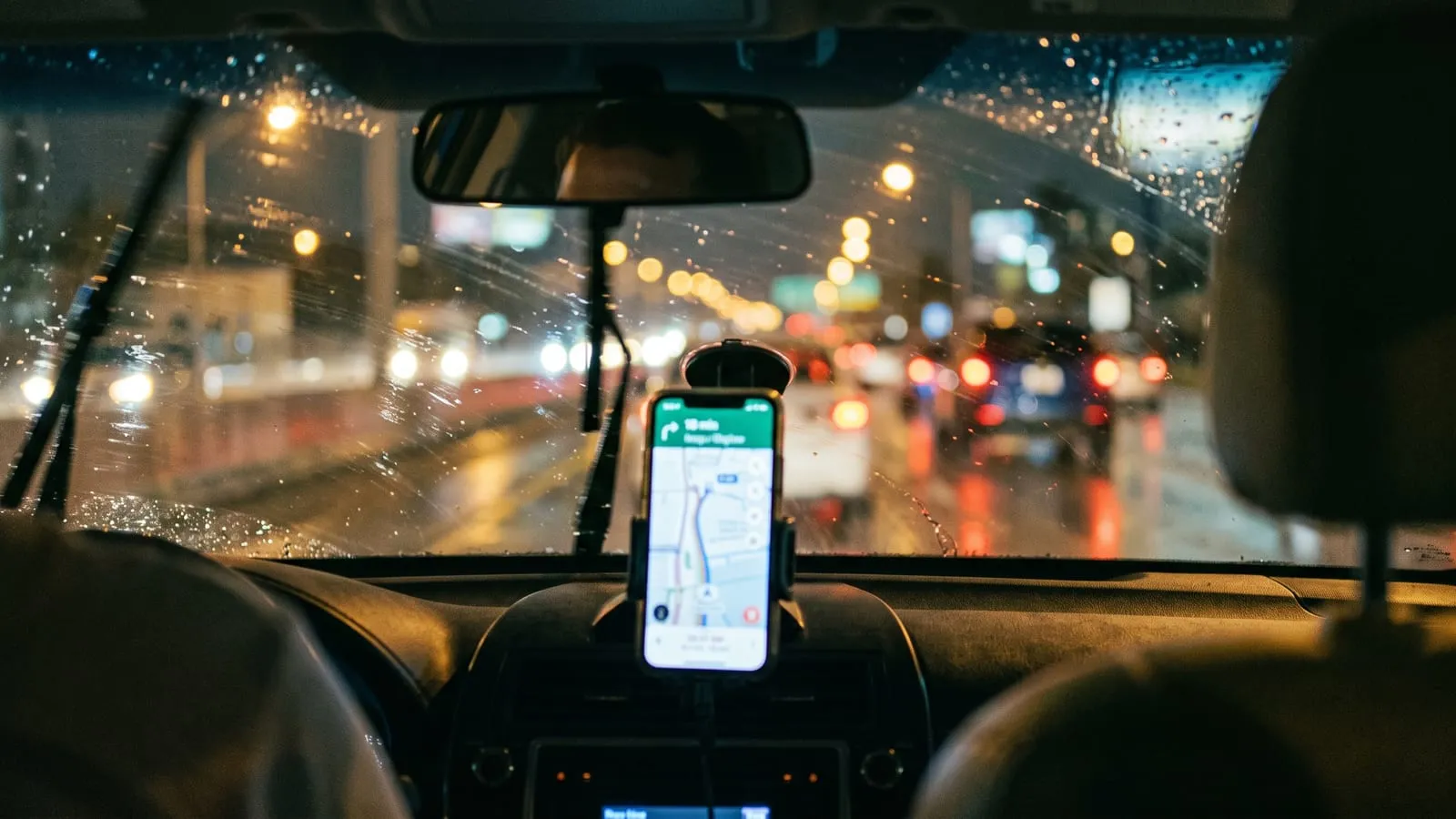
Why do so many Broward rideshare crashes happen at the curb?
Rideshare driving in Broward is concentrated in a handful of places, and most of them involve stopping, merging, or turning in heavy traffic. Think of the arrivals curb at Fort Lauderdale-Hollywood International Airport, the cruise terminals at Port Everglades on a turnaround morning, the restaurant strip on Las Olas Blvd on a Friday night, the hotels and bars along A1A on Fort Lauderdale Beach, and the Brightline station downtown. A driver pulls over without signaling, swings a U-turn to reach a waving passenger, or glances at the phone for the next request. A rider opens a door into a cyclist. Traffic on I-595 between the airport, the port and I-95 does the rest.
Each of those moments falls into a different insurance period. A driver who just dropped someone at a cruise terminal and is circling for the next request is in one period; the same driver, ten seconds later, heading to pick you up, is in another. That is why the timestamps matter so much.
How does one shift on the app change the insurance?
Florida's rideshare statute ties coverage to the driver's status minute by minute (Fla. Stat. § 627.748(7)). Walk through a typical shift:
- Logged in and waiting for a request. Either the company or the driver must carry at least $50,000 per person and $100,000 per crash for bodily injury, plus $25,000 for property damage.
- Request accepted, driving to the pickup, and carrying the rider. The company must provide $1,000,000 in liability coverage, along with PIP and uninsured motorist coverage, until the trip ends.
- Logged out. The driver is just another motorist. The personal auto policy is the only coverage, and many personal policies exclude commercial driving, so that coverage can be small or disputed.
I was the rider. Do I have to show who caused the crash?
Riders almost never share fault, because they were not driving. The claim is aimed at whoever caused the collision: your rideshare driver, a driver in another car, or both. If your driver was to blame, the $1,000,000 coverage that attaches to an active trip is available. If the other driver caused it and carried too little insurance, the uninsured motorist coverage the rideshare company must carry during trips can fill the gap.
Medical bills start with PIP. If you own a car, your own PIP pays first. If you do not own a car, the PIP on the rideshare vehicle covers you as its passenger. Treatment has to begin within 14 days of the crash for PIP to pay, so get checked even if you only feel sore. Broward Health Medical Center on S Andrews Ave and Memorial Regional Hospital in Hollywood are both Level I trauma centers, and any urgent care counts for PIP.
I'm only in town for a cruise or a vacation. Can I still bring a claim?
Yes. A crash on a Florida road can be pursued under Florida law even if you live in another state or another country. Many of the rides that end in a collision here start at FLL or Port Everglades, and the injured rider is on a plane or a ship a day later. Before you leave, get seen by a doctor, keep every record and receipt, and save the trip screenshots. After that, the firm can handle much of the case by phone and email while you are home. Which PIP coverage applies to a visitor depends on what insurance the visitor has at home, so that is one of the first things we sort out.
I drive for Uber or Lyft and another car hit me. What should I watch for?
You have a claim against the driver who hit you, and during an active trip the rideshare company's uninsured motorist coverage may also protect you. The trap is your own auto policy. If you drive for a rideshare company without a rideshare endorsement and your personal insurer finds out, it may deny the claim or cancel the policy. Before you call any insurer, Wolfson & Leon reviews your trip records and every policy involved so you know where you stand.
What proof decides a rideshare case, and how quickly can it disappear?
The trip record is the center of the case. It shows, to the second, whether the driver was offline, waiting, heading to a pickup, or carrying a rider, and that answer decides which coverage exists. Uber and Lyft keep that data, but they do not hand it over on their own; it comes through a formal request from a lawyer.
On your side, take screenshots right away: the receipt, the route map, the driver's name, photo and plate as the app showed them. Then get the crash report. Inside city limits the Fort Lauderdale Police Department writes it; in unincorporated areas and contract cities it is the Broward Sheriff's Office; on I-95 and I-595, where many airport and port trips run, it is usually the Florida Highway Patrol. Reports are available through the Florida Crash Portal.
What can a rideshare injury claim pay for?
PIP comes first and pays toward medical bills and lost income. Past that, an injured rider, driver, pedestrian or cyclist can claim medical expenses, lost wages, and, when the injury is permanent, pain and suffering. The source of that money depends on the driver's app status at impact: the $1,000,000 coverage during an accepted trip, the lower rideshare limits while the driver was waiting for a request, or the driver's personal policy with the app off (Fla. Stat. § 627.748). If someone other than the rideshare driver caused the crash, that person's bodily injury insurance and the company's uninsured motorist coverage come into the picture. Because the layers depend on timestamps, getting the trip data is the first job in every one of these cases.
What do people do after an Uber or Lyft crash that weakens the claim?
- Closing the app without saving anything. The receipt and route map are your proof that a trip was active. Screenshot them the same day.
- Letting the driver talk you out of calling the police. Drivers sometimes ask riders to skip the report. Report the crash to police and in the app.
- Explaining the whole crash to the company's claims administrator. Confirm the trip happened and stop there.
- Drivers: calling your personal insurer before checking your rideshare exclusion. That call can trigger a denial or a cancellation.
- Waiting to see a doctor. PIP will not pay for care that starts more than 14 days after the crash.
- Flying home or boarding the ship with no medical record of the injury. Visitors should be examined before they leave Broward.
- Trusting that the app company will make it right. Uber and Lyft meet their obligations through insurers, and those insurers handle your claim the way any insurer would.
Key facts
- From the moment a trip is accepted until the rider is dropped off, Uber and Lyft must have $1,000,000 in liability coverage in place. Source: Fla. Stat. § 627.748(7)(c)
- With the app on and no trip accepted, the minimum is $50,000 per person and $100,000 per crash for injuries, plus $25,000 for property damage. Source: Fla. Stat. § 627.748(7)(b)
- During trips, the rideshare company must also carry PIP and uninsured/underinsured motorist coverage. Source: Fla. Stat. § 627.748(7)(c)
- A rider who owns no car is covered by the PIP on the vehicle they were riding in. Source: Fla. Stat. § 627.736(4)(e)
- For crashes on or after March 24, 2023, a negligence lawsuit must be filed within two years. Source: Fla. Stat. § 95.11
Frequently asked questions
The app sent me a message asking what happened. Do I have to reply?
You can confirm that you were on the trip, and leave it there until you have spoken with a lawyer. The questions usually come from a claims administrator working for the company's insurer, and your answers are kept and can be used to value your claim lower.
Can I sue Uber or Lyft as a company?
In most cases the claim runs against the insurance the company is required to carry rather than the company itself, because Florida treats rideshare drivers as independent contractors. In practice, the $1,000,000 policy is usually where the money comes from. We look at whether your facts support any direct claim.
A rideshare car hit me while I was crossing Las Olas or riding a bike on A1A. Does the rideshare coverage reach me?
Yes, if the driver had accepted a trip or was carrying a rider: the $1,000,000 coverage protects people outside the car too. If the app was on but no trip was accepted, the lower limits apply. If the app was off, you are dealing with the driver's personal policy. See also our page on pedestrian and bicycle accidents.
How do we prove what the driver's app was doing?
With the company's own trip and login data. Your receipt and screenshots are the starting point; the full record comes from a formal request that Wolfson & Leon sends as soon as it is retained.
My driver was not at fault. The other driver had no insurance. Am I stuck?
Not necessarily. During a trip, the rideshare company must carry uninsured motorist coverage, and you may have your own as well. Your PIP still pays first for medical bills. Our uninsured motorist page explains how that coverage works.
What happens when you call
Someone at the firm picks up
Call (754) 305-0820 day or night and you reach a member of the team, who can speak with you in Spanish if that is easier. After hours, we take your name and number and an attorney calls you back that morning.
A short conversation about the accident
We will ask for the date and place, whether a doctor has seen you, whether police wrote a report, and whether an insurance company has contacted you. It usually takes a quarter of an hour, and you do not need to find any documents first.
A straight answer, even if it is not the one you hoped for
If your case is one we can take, we walk you through what comes next and what to avoid for now, such as giving a recorded statement. If it is not, we say so plainly and point you to someone who may help.
Nothing to pay up front
If you decide to work with us, the fee is a percentage of whatever is recovered, set out in writing before you sign. No recovery means no fee. If you cannot get to downtown Fort Lauderdale, we come to your home or the hospital.
Nothing has been published on this topic so far. Call the office and an attorney can answer your question.