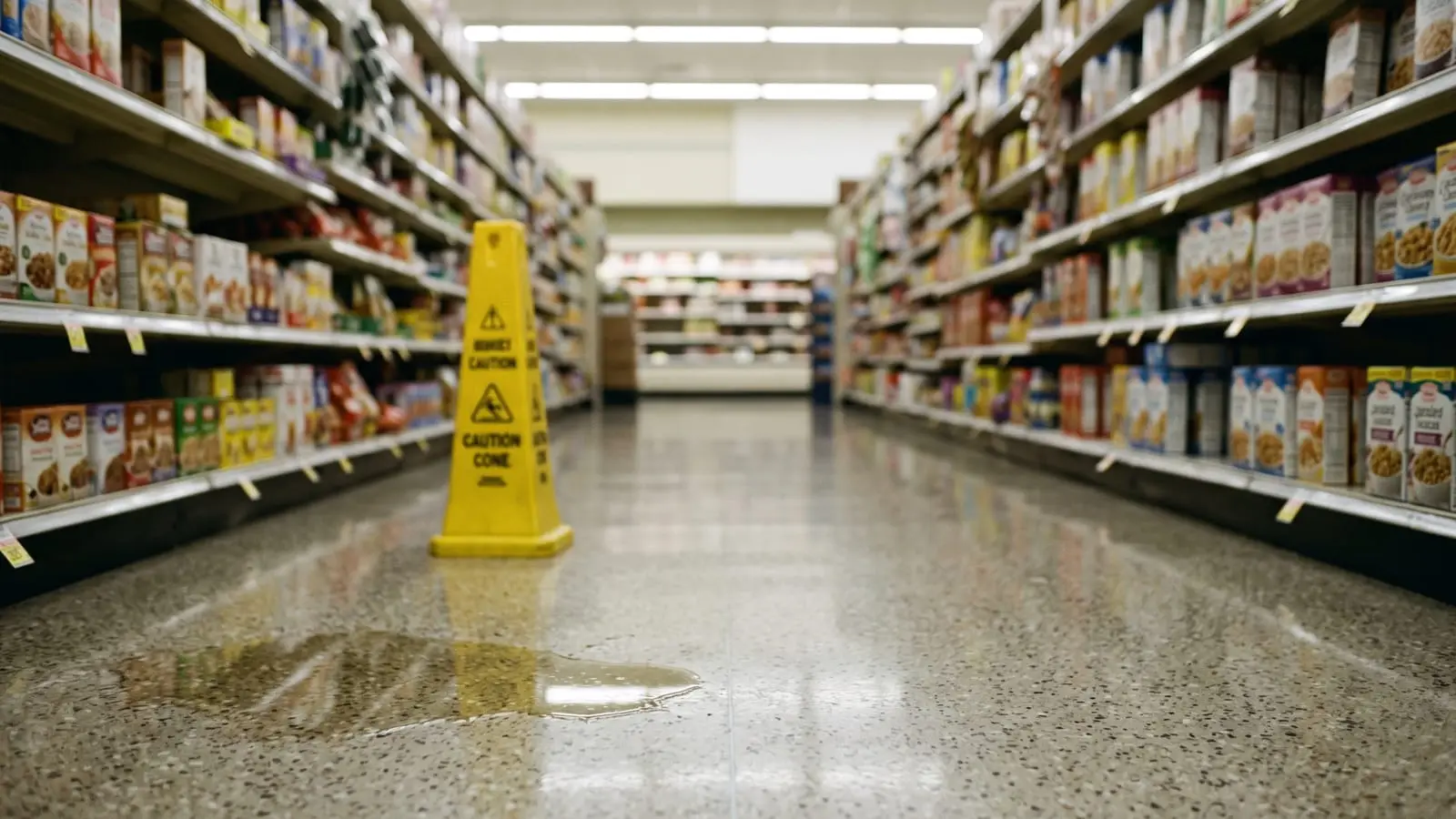
Who is responsible if I fall at a store, hotel, or condo in Fort Lauderdale?
The owner or business in control of the property is responsible for a fall in Fort Lauderdale when it knew, or should have known, about the danger and did not fix it or warn you. If you slipped on something on the floor of a business, such as spilled water, cooking oil, or a dropped grape, Florida puts the burden on you to show the business had actual or constructive knowledge of it: the spill sat there long enough that staff should have found it, or the same problem kept coming back (Fla. Stat. § 768.0755).
That makes the first hours after a fall unusually important. Tell a manager, photograph the floor before anyone cleans it, and get medical care the same day. Wolfson & Leon has handled premises injury cases since 1963 and works from the 110 Tower in downtown Fort Lauderdale. The consultation is free, in English or Spanish, and you pay no fee unless the firm recovers money for you.
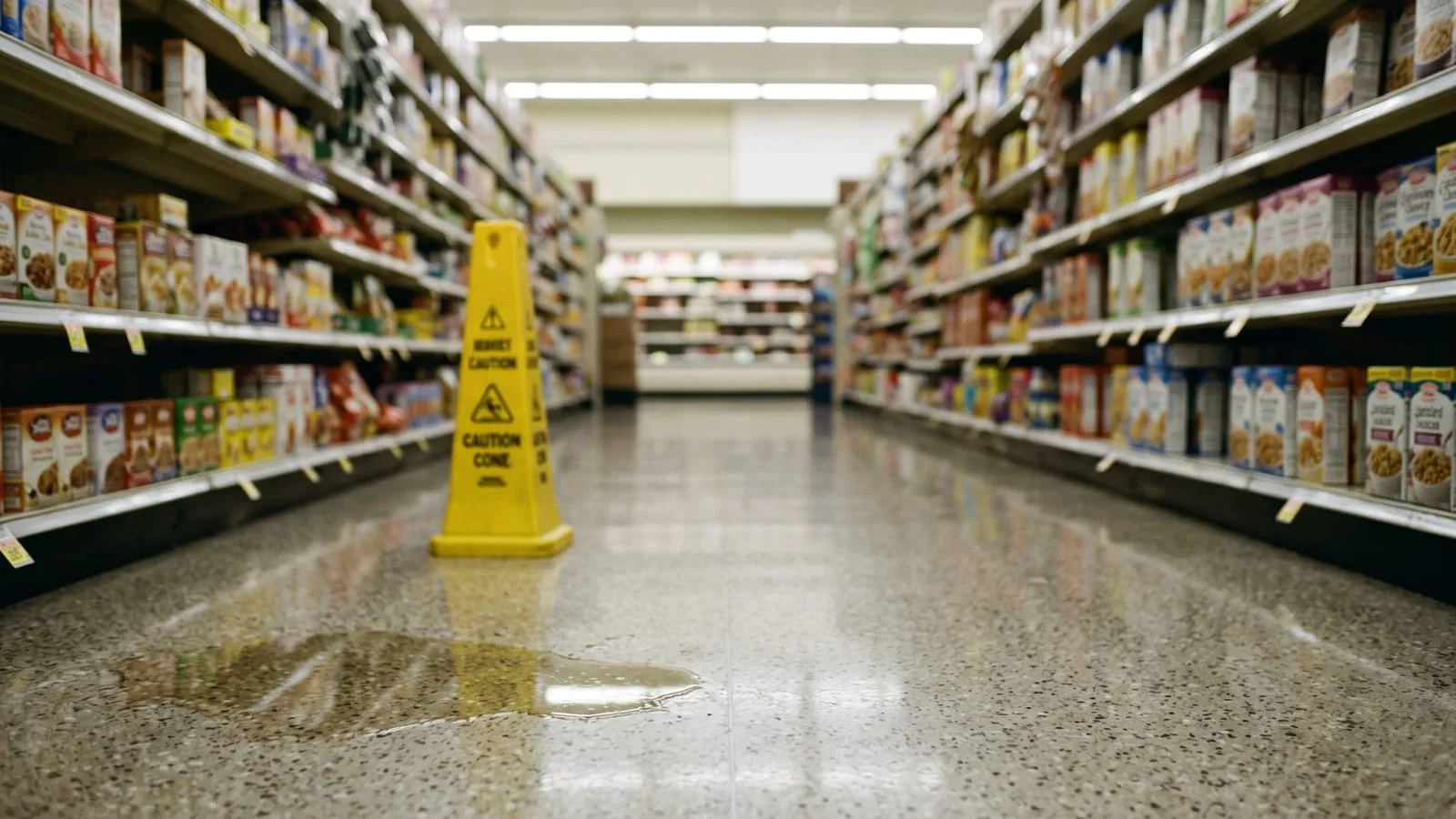
What turns a fall into someone else's legal responsibility?
Not every fall is a case. A Florida fall claim rests on three things, and you need all of them:
- A hazard. Something on the property was unreasonably dangerous: a slick floor, a loose or broken tile, a step with no marking, a dark stairwell, a cracked pool deck, a hole in the parking lot.
- Knowledge. The owner or business knew about it, or should have. An employee caused it, it had been there long enough to be found on a normal walk-through, or it kept happening.
- Cause. That hazard is what made you fall, and the fall is what caused your injuries.
Does it matter whether I fell at a supermarket, a hotel, or a condo?
The basic rule is the same everywhere, but the details, and who you claim against, change with the kind of property. In Broward, falls tend to come from a few familiar settings:
- Supermarkets and big-box stores. Publix is everywhere in Broward, and every grocery and big-box store deals with the same risks: produce and liquids in the aisles, leaking coolers, and rainwater tracked in at the entrance. This is where the substance rule in Fla. Stat. § 768.0755 matters most.
- Beach hotels along A1A. Sand and water on lobby tile, wet pool decks, outdoor stairs, and bathroom floors in guest rooms.
- Condo buildings and pools. Lobbies, garages, walkways and pool areas are usually controlled by the building, not by the unit owner you were visiting, so the claim often runs against whoever maintains those common areas.
- Short-term and vacation rentals. Loose railings, slick outdoor showers, unlit steps. The claim is usually against the owner who rents the property and, in some cases, a management company.
- Las Olas and beach-area restaurants. Wet kitchen-to-dining floors, spilled drinks, and uneven pavers in outdoor seating areas.
- Malls and parking garages. At places like the Galleria at Fort Lauderdale or Sawgrass Mills in Sunrise, the mall and the individual store may each control different floors. In garages, poor lighting, oil and ramps are the usual hazards.
- Cruise terminals. A fall in a Port Everglades terminal may involve a private company or a public body, depending on who owns and runs that space. A fall on the ship itself follows different rules; see our page on cruise and boating accidents.
What should I do in the first 48 hours after a fall?
- Get a manager and have the fall written up. Ask for the manager's name. If they hand you a form, sign only something that says you reported the fall, not a description of how it happened.
- Photograph the spot now, before someone mops it: the substance or defect, the lighting, whether any warning sign was there, and the shoes you had on.
- Find the witnesses. Get names and numbers from anyone who saw you go down or saw the hazard before you got there. An independent witness is the best proof of how long a spill sat on the floor.
- See a doctor today, and describe exactly how you fell. A gap between the fall and your first visit is the first thing an insurer will question.
- Keep your shoes and clothes as they are. Do not wash or throw them away.
- Hold off on any recorded statement to the property's insurer until you have talked to a lawyer.
Is there video of my fall, and how do I keep it from being erased?
In most stores, hotels, restaurants and garages, cameras are recording all the time. The footage often proves more than the fall itself: it can show when the spill appeared, how long it sat there, and whether employees walked by without stopping, which is exactly the knowledge Florida's substance statute requires you to prove.
The problem is time. Video is commonly recorded over within about 30 days unless someone asks, in writing, for it to be kept. Wolfson & Leon sends a written preservation letter to the property as soon as we are hired. If you wait a month to call a lawyer, the best evidence in your case may already be gone.
I fell at my apartment, a rental, or a friend's house. Who is responsible?
A landlord has to keep common areas reasonably safe, such as stairs, hallways, walkways, parking areas and pool decks, and has to repair dangers it knows about within a reasonable time. Broken stairs, burned-out lights in a stairwell, and cracked pool decks are common examples in Broward apartment and condo buildings.
A homeowner owes a guest a warning about dangers the owner knows about and the guest would not see. If you fell at a friend's or relative's home, the claim is made against the homeowner's insurance policy, not against your friend's own pocket. Many people hesitate to bring a claim for that reason; the insurance exists for exactly this situation.
How long do I have, and what if I fell on public property?
For falls on or after March 24, 2023, a negligence lawsuit generally has to be filed within two years (Fla. Stat. § 95.11). Falls on government property are different. If you fell at a city park, a beach park, a county building, or a public school, you must send written notice to the agency and to the Florida Department of Financial Services before you can sue (Fla. Stat. § 768.28(6)). Those deadlines are shorter and less forgiving, so call early.
What can I be compensated for after a fall?
When a property owner's negligence caused your fall, you can claim medical bills, lost wages, and pain and suffering. Unlike a car crash, a premises case has no PIP and no permanent-injury threshold, so pain and suffering is available for any injury the negligence caused. A jury can lower the award by whatever share of fault it assigns to you under Fla. Stat. § 768.81, and you recover nothing if that share is more than 50%. Supermarkets, hotels, restaurants and condo associations in Broward generally carry liability insurance with meaningful limits. In most fall cases, then, the hard part is not finding coverage. It is proving what the owner knew, under Fla. Stat. § 768.0755.
Which mistakes most often sink a fall claim?
- Leaving without telling anyone. If no one wrote it up that day, the property will say the fall never happened there.
- Calling a lawyer a month later. By then the video that shows how long the hazard sat there has usually been recorded over.
- Agreeing in a recorded call that you weren't watching where you were going. That sentence will be quoted back to you.
- Throwing out or washing the shoes. Footwear comes up in almost every fall case.
- Signing the property's version of events. Sign only an acknowledgment that you reported the fall.
- Putting off the doctor. Same-day records tie the injury to the fall; a gap of a week gives the insurer room to doubt it.
- Checking out of the hotel or ending the rental without a written report. Visitors should get the report on file before they leave.
Key facts
- When you slip on a substance in a business, you must prove the business had actual or constructive knowledge of it. Source: Fla. Stat. § 768.0755
- Constructive knowledge can be shown by how long the condition existed or by proof that it happened regularly. Source: Fla. Stat. § 768.0755(1)
- An injured person found more than 50% at fault for the fall recovers nothing. Source: Fla. Stat. § 768.81(6)
- For falls on or after March 24, 2023, a negligence lawsuit must be filed within two years. Source: Fla. Stat. § 95.11
- A claim against a city, a county, or the state requires written notice before suit. Source: Fla. Stat. § 768.28(6)
Frequently asked questions
I fell at a beach hotel on vacation. Can I pursue it after I fly home?
Yes. A fall in Florida is handled under Florida law no matter where you live. Report it at the front desk before you check out, photograph the spot, and see a doctor while you are here if you can. After that, the firm can handle much of the case by phone and email.
Does PIP cover a slip and fall?
No. PIP is car insurance and applies to motor vehicle crashes. A fall claim is paid by the property's liability insurance, and there is no permanent-injury threshold, so pain and suffering can be claimed for any injury the owner's negligence caused.
I was wearing flip-flops. Will they use that against me?
They will probably try. Footwear is a standard defense argument. It may affect how fault is shared, but comparative fault only reduces your recovery, and it bars the claim only if you were more than 50% at fault. Keep the shoes; they can help as much as hurt.
There was a caution cone near the spill. Is my case over?
Not necessarily. A warning has to be placed where a reasonable person would see it before reaching the hazard, and putting out a cone does not excuse leaving a spill on the floor for a long time. Video often shows where the cone was and when it appeared.
I didn't report the fall when it happened. Is it too late?
Not necessarily, but it is harder. Report it now, in writing, and see a doctor if you have not. The sooner the property is on notice, the better the chance that video and witness information can still be saved.
How much is a fall case worth?
That depends on the injury, the treatment, whether it is permanent, the income you lost, and how strong the proof is that the owner knew about the hazard. No honest lawyer can give you a number on a first call, and Wolfson & Leon does not.
What happens when you call
Someone at the firm picks up
Call (754) 305-0820 day or night and you reach a member of the team, who can speak with you in Spanish if that is easier. After hours, we take your name and number and an attorney calls you back that morning.
A short conversation about the accident
We will ask for the date and place, whether a doctor has seen you, whether police wrote a report, and whether an insurance company has contacted you. It usually takes a quarter of an hour, and you do not need to find any documents first.
A straight answer, even if it is not the one you hoped for
If your case is one we can take, we walk you through what comes next and what to avoid for now, such as giving a recorded statement. If it is not, we say so plainly and point you to someone who may help.
Nothing to pay up front
If you decide to work with us, the fee is a percentage of whatever is recovered, set out in writing before you sign. No recovery means no fee. If you cannot get to downtown Fort Lauderdale, we come to your home or the hospital.